Your shopping cart is empty!

MENU
-
Quad Bikes+
-
Dirt Bikes+
-
Scooters+
-
Fitness+
- E-BIKES +
-
Ride On's+
-
Cycles+
-
Kids Play+
- Baby +
-
Sports & Games+
- Sale +
Your shopping cart is empty!
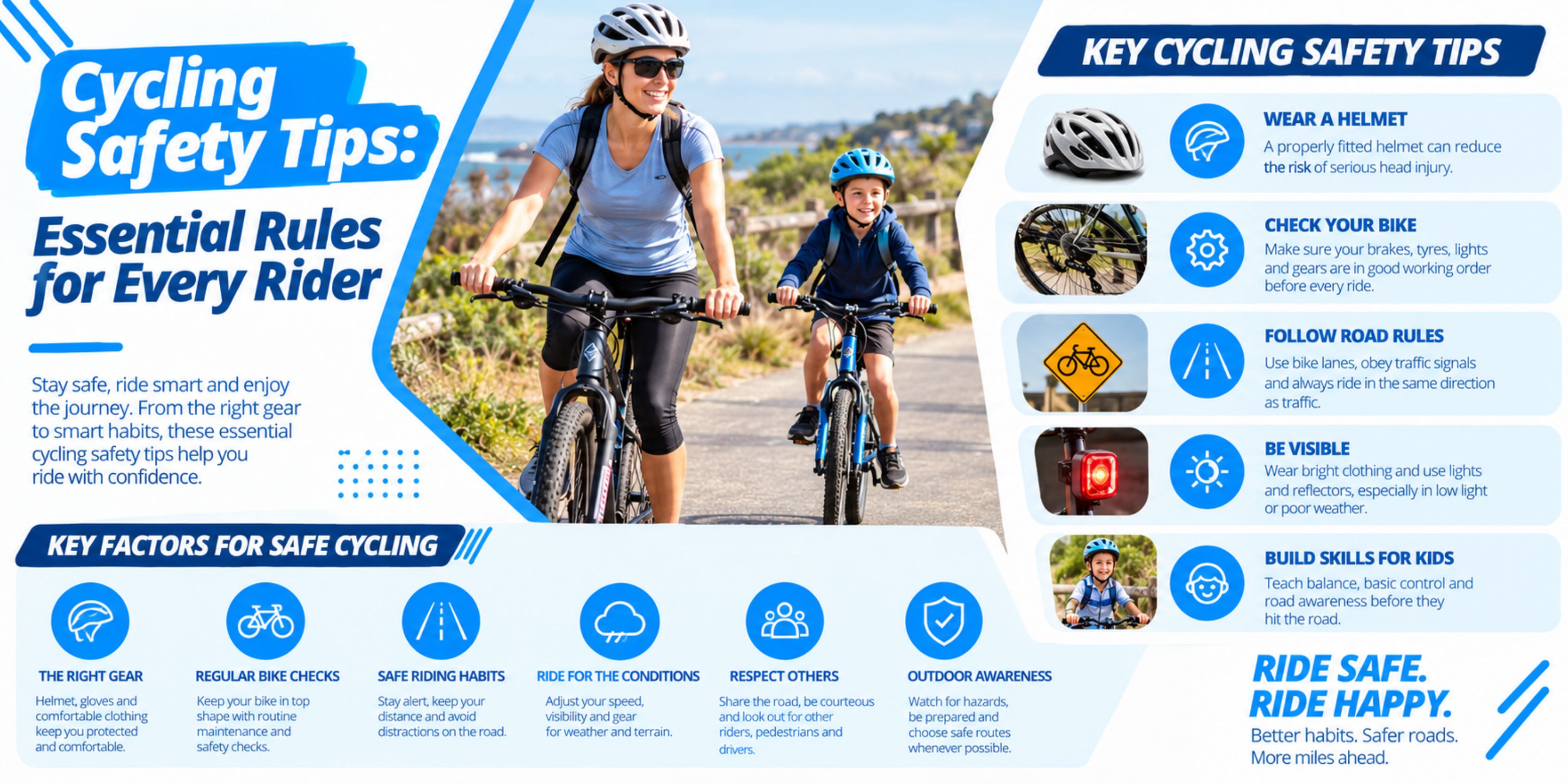 Biking is a great way to get exercise, go for a walk, or spend quality time with your family. Most typical bicycle accidents can be prevented through proper use of a helmet, making a simple visual inspection of the bike, and being aware of the environment around you. It doesn't matter if you're going to work on your bike or riding down the bike path; all cyclists should practice these basic safety procedures.
The skills that bike riders develop are achieved at a much younger age, and the perfect way to make this start is with good kids' outdoor play equipment. Good play equipment for kids provides this training at the right stage when it is accessible to their height and understanding.
There are habits to follow for a safe ride: wear the right equipment, inspect the bike, be seen, and stay alert. They all apply to every rider, including kids ride on toys and adults on trail bikes. Review the following tips before each ride. They will eventually become easier to follow.
The one rule that never changes is that of using equipment. Prior to exiting the driveway, ensure you have:
If the bike goes out of control on the ride, this is a dangerous situation. This two-minute check-up identifies a lot of mechanical issues that can become a safety hazard before they do.
| Check | What to look for |
| Tyres | Firm pressure, no cracks or embedded debris |
| Brakes | Levers squeeze smoothly and stop the wheel firmly |
| Chain | Clean, lightly oiled, and running without skipping |
| Wheels and bolts | No wobble, and quick-release levers fully closed |
Don't surprise the driver. Lead out straight, signal early with one smooth and obvious extension of your arm, and look at the point of conflict. Don't listen to headphones that block out oncoming traffic. Slow at driveways where cars may back out of hiding.
Significant crashes happen typically at intersections.
Demonstrate your path, bring water with you, and avoid going down or up. The GT Bicycles Avalanche Elite 29" Trail offers a hardtail option in gloss mystic red, but it's all about technique: ride before the turn, stay low, and brake early.
Learning to control comes before learning to drive a vehicle on a street. Materials are layered and learner-friendly, fostering a positive learning environment at all levels.
Practicing in the backyard strengthens the muscles and reflexes that you use while riding. If a child is jumping at any one time, and there's supervision from an adult, then a trampoline such as a Lifespan 12ft HyperJump3 Springless Trampoline makes jumping a coordination activity. A kids' cubby house comes with creative play, a climbable wall, and protection from the sun in between rounds.
The bottom line of safe cycling: be prepared and practice good habits, wear the right gear, maintain your bike, and always be aware at intersections. Practice those habits from day one, whether it is riding on play equipment for kids or a bicycle on the road – your younger rider will bring those on the road with them. Before heading out, you can check the full collection on Go Easy online for product information. Just a few little checks to make every ride safe, fun, and ready for the next one.
Wear a helmet that fits well. A helmet can reduce the risk of serious head injuries that can occur as a result of a cycling fall.
Small pedal bikes and balance bikes are recommended for most children 2-5 years old. But age is not the main factor- size, balance, and coordination are much more important.
Yes. Climbing, jumping, and swinging will enhance their balance, grip, and coordination. The right play equipment for small, medium, and larger kids can help them develop safely before they move on to bikes.
The kids' cubby house is a great place for your kids to climb in and out; it provides strength and body awareness, and a place for them to sit and have a drink break during practice.


