Your shopping cart is empty!

MENU
- Eofy +
-
Quad Bikes+
-
Dirt Bikes+
-
Scooters+
-
Fitness+
- E-BIKES +
-
Ride On's+
-
Cycles+
-
Kids Play+
- Baby +
-
Sports & Games+
- Sale +
Your shopping cart is empty!
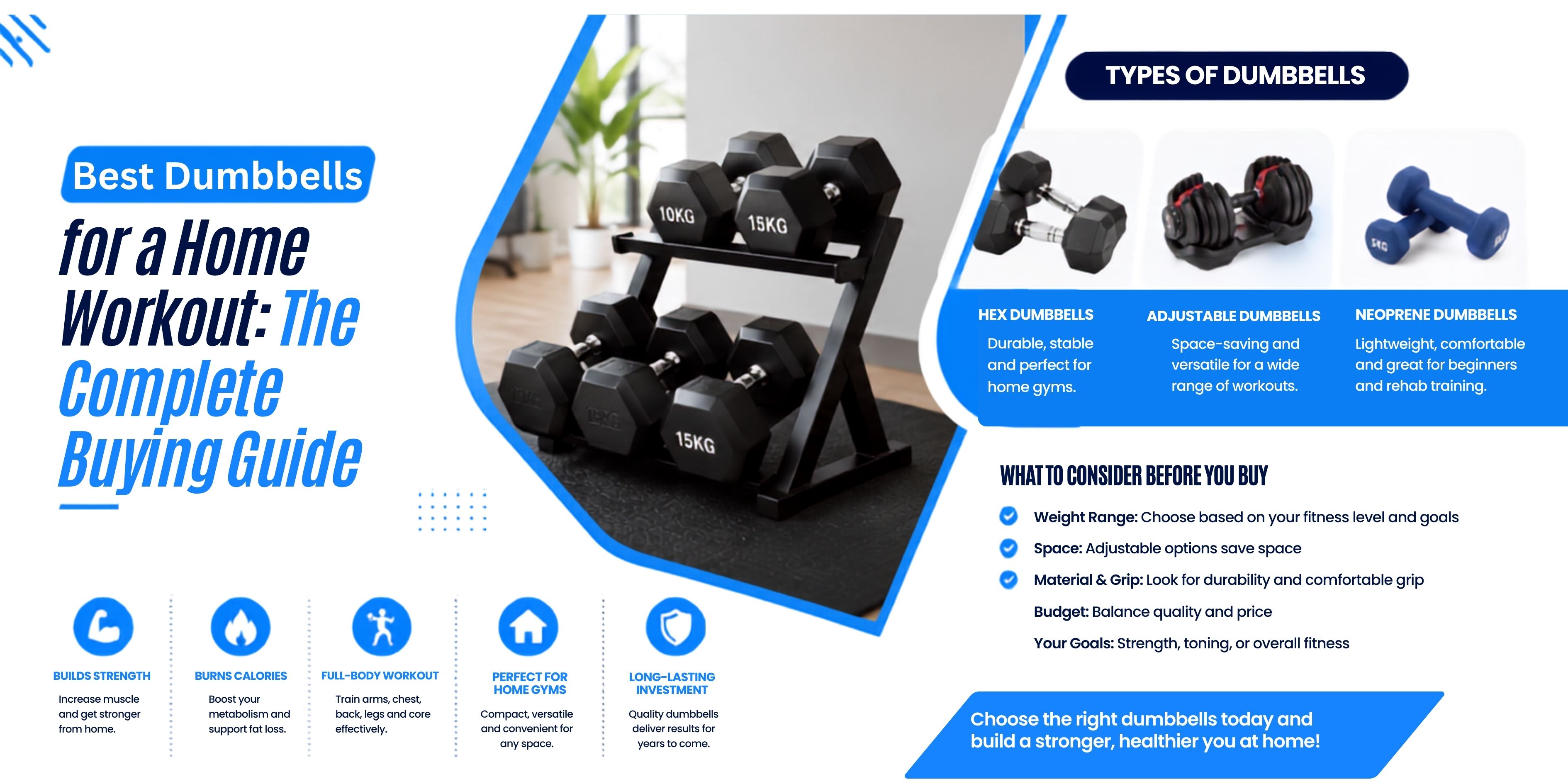 You don't have to have a warehouse of machines to create an exercise space at home; you need the right tools. For strength training, toning, and cardio circuits, a decent pair of dumbbells can do it all—and it's one of the most useful home gym weights to own. This guide explains the different types, shows how to select carefully, and explains what you should do once the items arrive at home.
A specific weight per pair, typically with a rubber or neoprene covering. There is no assembly, no adjusting, just pick up and go. Ideal for beginners or those who prefer to have a couple of pairs for easy, simple sessions.
Many sets offered for home use are not really suitable for living room application. There are a few things between a good purchase and being forgotten in the garage:
With the weights in your possession, structure becomes more important than equipment. A brief session made up of three parts and repeated 3-4 times during the week yields predictable results.
Complete goblet squats, bent-over rows, shoulder presses, Romanian deadlifts, and bicep curls in threes of 10 to 12 repetitions with a brief rest between sets. Change exercises to maintain progression every week or every two weeks.
Conclude with gentle stretching for the hamstrings, lower back, and shoulders. A few minutes here will help you loosen up for the next exercise session and keep you flexible the next day.
What to Check | Why It Matters |
Incline/decline positions | Allows for targeting the upper, mid, and lower chest versus a single flat angle |
Frame material | Hard steel grips heavy loads and will not wobble after use. |
Weight capacity | Should do more than your bodyweight and dumbbells pressed comfortably. |
Padding thickness | Stickier and stiffer padding remains comfortable on long sets |
Folding/storage | If the bench needs to be folded between sets, you should consider one. |


